Happy Rainbow Family: A Font Trio for Playful, Authentic Design
There's a particular warmth that comes with a design that feels genuinely joyful—not forced, not saccharine, but authentically cheerful. If you've ever struggled to find a typeface that captures that feeling without veering into cartoonish territory or looking amateur, you'll appreciate what Happy Rainbow Family brings to the table. This premium font trio combines a display style, a serif option, and a script face into one cohesive package, and the result is something that feels both polished and wonderfully approachable.
Understanding the Personality Behind the Typeface
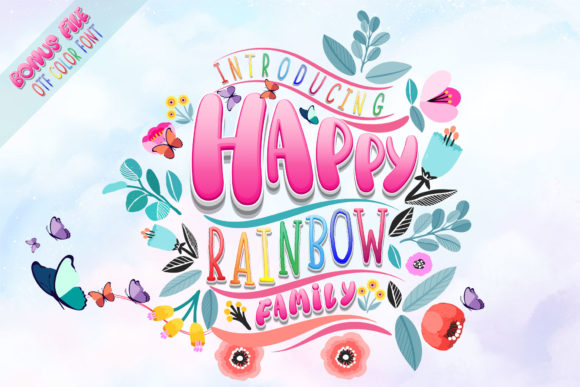
Happy Rainbow Family isn't trying to be everything to everyone, and that's precisely what makes it effective. The display style carries bold, confident letterforms that command attention on posters, headers, and packaging. The serif companion adds a touch of structure and readability, grounding the more expressive elements. Then the script font introduces a handwritten quality—fluid, organic, and full of character—that brings an intimate, personal feel to any layout.
What ties these three styles together is a shared sense of playfulness rooted in authenticity. The curves are generous. The strokes have personality. The overall impression is one of warmth and approachability, which is why this typeface works so beautifully for projects targeting families, children, educators, and anyone who wants their brand to feel welcoming rather than corporate.
Think about the last time a piece of packaging made you smile before you even read the words. That's the kind of visual language Happy Rainbow Family speaks fluently. It doesn't rely on gimmicks or exaggerated proportions. Instead, it uses thoughtful design details—slightly rounded terminals, balanced spacing, and just enough quirkiness—to create an emotional connection with viewers.
Where This Creative Font Truly Shines
The beauty of a well-constructed font family is versatility, and Happy Rainbow Family delivers on that front in practical, meaningful ways. Let's walk through some real applications where this typeface can make a noticeable difference.
Children's brands and educational materials are an obvious starting point. Whether you're designing a daycare logo, creating worksheets for a tutoring business, or building a brand identity for a kids' clothing line, the trio gives you enough range to maintain visual consistency across different touchpoints. Use the display style for headlines, the serif for body copy on printed handouts, and the script for personalized touches like names on certificates or thank-you notes.
Packaging design is another area where Happy Rainbow Family excels. Imagine a line of organic baby snacks or a handmade toy brand. The script font on the front label creates that artisanal, handcrafted feeling consumers respond to, while the serif style keeps ingredient lists and nutritional information legible on the back. The display face works beautifully for the brand name itself, especially when sized large on boxes, bags, or jars.
For social media graphics, this font trio solves a common problem: maintaining a consistent look across different content types. Your quote posts can use the script for a personal touch. Promotional announcements can lean on the display style for impact. Informational carousel slides can rely on the serif for comfortable reading. The result is a feed that feels cohesive without being monotonous.
Event invitations and stationery represent another natural fit. Birthday party invitations, baby shower announcements, school event flyers, and community gathering posters all benefit from typography that feels festive yet approachable. The script font, in particular, lends itself beautifully to formal-yet-friendly invitations where you want elegance without stuffiness.
Don't overlook digital products and editorial layouts either. If you sell printable planners, activity books, or educational downloads, having a font that looks great both on screen and in print is essential. Happy Rainbow Family's three styles give you the flexibility to create layouts with clear visual hierarchy—something that directly impacts how usable and professional your digital products appear.
Practical Tips for Working with a Font Trio
Having three complementary styles in one package is convenient, but knowing how to use them together thoughtfully separates good design from great design. Here are some observations from real-world projects.
Establish hierarchy with intention. The display font should almost exclusively handle headlines and focal points. Overusing it dilutes its impact and can make a layout feel cluttered. Reserve the serif for longer passages where readability matters most—paragraphs, product descriptions, informational text. The script works best as an accent: pull quotes, subheadings, signatures, or decorative elements. When you assign each style a clear role, the whole composition feels organized and purposeful.
Test font pairings before committing. Even though the three styles within Happy Rainbow Family are designed to work together, you'll still want to experiment with sizing, weight, and spacing. A script font set too small becomes illegible. A display font crammed into a narrow column loses its impact. Print a test page. View your layout on different screens. Step away and come back with fresh eyes. These simple habits save you from costly revisions later.
Consider your audience's expectations. A children's activity center and a boutique bakery might both benefit from a playful typeface, but the application will differ. The activity center might lean heavily into the display and script styles for maximum energy. The bakery might favor the serif for a slightly more refined feel, using the script sparingly for menu highlights. Understanding who will see your design—and what impression you want to leave—guides every typographic decision.
Pay attention to readability at actual sizes. This matters especially for web design and print materials. A font that looks gorgeous at 48 pixels on your laptop screen might become a headache at 14 pixels on a mobile device. Always test body text at the size it will actually be read. If the serif style within Happy Rainbow Family reads comfortably at your target size, you're in good shape. If not, consider reserving it for larger applications and pairing it with a clean sans serif font for small text.
Building Brand Recognition with Intentional Typography
Typography is one of the most underrated tools in brand identity. When someone sees consistent typeface choices across a website, social media presence, packaging, and printed materials, that visual pattern builds recognition. They start associating those letterforms with your business before they even process the words themselves.
Happy Rainbow Family makes this consistency achievable because you get three related styles from one source. You're not cobbling together fonts from different foundries and hoping they play nicely. The display, serif, and script faces share proportional relationships, weight distributions, and stylistic DNA that naturally harmonize.
This matters more than many people realize. A brand that uses one playful font on Instagram, a completely different style on its website, and yet another on its product labels creates visual noise. Customers might not consciously notice the inconsistency, but it subtly undermines trust. Conversely, a unified typographic system—built from a thoughtfully designed font family—communicates professionalism, attention to detail, and reliability.
For small business owners and entrepreneurs especially, investing in a quality font family is one of the highest-return design decisions you can make. It streamlines your design workflow, ensures your marketing assets look polished across platforms, and gives your brand a distinctive voice that stands out in crowded markets.
Licensing and Long-Term Value
Before incorporating any font into commercial projects, reviewing the licensing terms is non-negotiable. Most premium fonts, including Happy Rainbow Family, come with specific usage rights that outline what's permitted—whether that covers digital use, print production, merchandise, or embedding in applications. Understanding these terms upfront protects you legally and ensures you're getting full value from your investment.
If you plan to use the font across multiple projects or for client work, verify that your license covers those applications. Some licenses are single-project; others are more flexible. When in doubt, reach out to the foundry or distributor for clarification. It's a small step that prevents headaches down the road.
A font trio like this one offers genuine long-term value. Instead of purchasing separate display, serif, and script fonts—and then spending hours testing whether they work together—you get a pre-balanced system ready for immediate use. For designers managing multiple projects or small business owners wearing every hat in the company, that efficiency translates directly into saved time and better results.
The right typography doesn't just make things look pretty. It communicates personality, builds trust, guides the eye, and creates emotional resonance. When you find a font family that aligns with your project's spirit—something cheerful, authentic, and versatile—everything you design with it carries that energy forward.