Cenura: The Geometry of Modern Branding
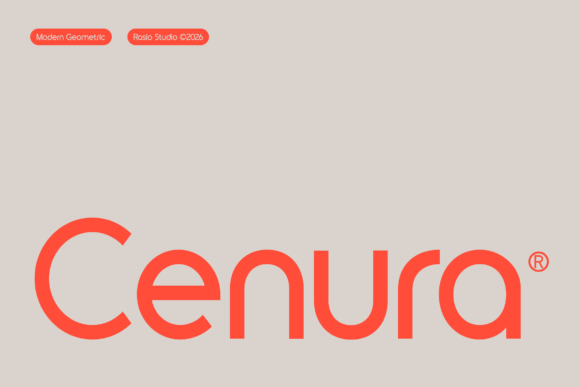
When you look at a building by Zaha Hadid or the interface of a high-end electric vehicle, there is a specific feeling that washes over you. It isn't just about cleanliness; it is about a sense of inevitable precision. It is the feeling that every curve was calculated and every line was drawn with a ruler that costs more than your rent. If you are a designer or a brand strategist trying to bottle that specific energy for a client, you know how difficult it is to find a typeface that bridges the gap between cold mathematics and inviting aesthetics. Enter Cenura. This ultra-sleek, modern geometric sans-serif font manages to strike that precarious balance, offering a tool that feels both futuristic and deeply grounded in structural integrity.
The defining characteristic of Cenura is its mastery of negative space. In typography, what you don't see is often more important than what you do. Cenura features sweeping, fluid circular tracking paired with hard-vertical stems. This creates a visual rhythm that is incredibly stable. If you have ever struggled with a font that looked "messy" even when perfectly aligned, it usually comes down to how the white space is handled between the letters. Cenura has been engineered with perfect optical kerning. This means the software isn't just guessing where one letter ends and another begins; the spacing is tuned to allow the negative space to "breathe" with maximum intelligence. The result is a typeface that performs flawlessly when laid over solid color fields or set against the busy backgrounds of minimalist architecture photography.
Precision for the Digital and Physical World
For those of us working in web design and digital products, the demand for legibility on high-resolution screens is non-negotiable. Cenura’s low-profile, uniform line weight ensures that it renders beautifully on everything from a 4K monitor to a mobile app interface. Because it avoids thick-to-thin transitions (like you might find in a Didone serif font), it doesn't break down or look "fuzzy" when scaled down for UI elements or mobile navigation bars. This makes it an extraordinary asset for futuristic app user interfaces. Imagine using this for the dashboard of a fintech app or a smart home control panel—the geometric precision immediately signals to the user that the technology behind the interface is reliable and sophisticated.
However, its utility extends far beyond the screen. If you are working on industrial product labeling, the uniform line weight becomes a practical necessity. On packaging, where ink density and printing tolerances can vary, a font with ultra-thin hairlines can sometimes disappear. Cenura’s stabilized structural rhythm holds up under the pressure of commercial printing processes. Whether you are designing for a luxury corporate stationery layout or high-impact industrial signage, the typeface maintains its premium corporate aesthetic without losing its edge.
Architectural Aesthetics in Branding
If you are a branding agency or a freelance designer working with modern tech startups, you know that the "tech aesthetic" is evolving. We are moving away from the playful, rounded "blob" fonts of the early 2020s and shifting toward a more serious, confident visual language. Cenura fits perfectly into this shift. It channels an architectural vibe—think of the signage in a modern art museum or the lettering etched into the glass of a high-rise lobby.
When developing a brand identity, consistency is king. Cenura allows you to create a cohesive visual system that works across various touchpoints. For example, a minimalist architectural firm could use Cenura for their primary wordmark, their project proposal PDFs, and their site signage. Because the font carries such a distinct "voice" of sophistication, it does a lot of the heavy lifting in establishing brand recognition. You don't need to add excessive ornamentation or flashy graphics; the typography itself communicates professionalism and forward-thinking design.
Practical Applications for Content Creators
You don't have to be designing a skyscraper to make use of this typeface. For bloggers, content creators, and small business owners, Cenura offers a way to instantly upgrade the look of marketing assets without a complete rebrand. If you are running a lifestyle brand that leans toward the "clean girl" or "minimalist" aesthetic, using a display font like Cenura for your headers on social media graphics can unify your Instagram grid or Pinterest boards.
Consider the impact on editorial design. If you are self-publishing a lookbook, a catalog, or a digital magazine, the hierarchy of your text is crucial. Cenura works best as a display or headline font. Its geometric nature commands attention in large point sizes, making it ideal for magazine covers, poster designs, and hero sections on landing pages. It grabs the eye, while allowing you to pair it with a more traditional serif or a highly readable sans-serif for the body copy.
Mastering the Art of Font Pairing
One of the most common questions I hear from junior designers is, "How do I pair a geometric sans-serif without making the layout look boring?" It is a valid concern. Because geometric fonts are mathematically precise, they can sometimes lack warmth on their own. The key to working with Cenura is contrast.
Because Cenura has such a clean, hard-vertical structure, it pairs beautifully with typefaces that have organic, humanist qualities. Try combining Cenura headlines with a soft, readable serif font for your body text—perhaps something like a transitional serif that offers a bit of old-world charm. Alternatively, for a modern tech aesthetic, you could pair it with a monospaced font for code snippets or technical specifications, which creates a nice "high-tech" vibe.
However, avoid pairing it with other aggressive geometric fonts. If both your headline and your sub-headline are fighting for attention with similar geometric weights, the layout will feel cluttered and chaotic. Let Cenura be the "architect" of the page—strong, structural, and defining—while your secondary font acts as the "interior designer," adding texture and comfort.
Readability and Licensing: The Business Side
While Cenura is a stunning display font, it is important to respect the intended use of typefaces. As a general rule of thumb for visual communication, geometric sans-serifs are best used for headlines, sub-headers, pull quotes, and short bursts of text (like buttons or labels). Avoid using Cenura for long-form paragraphs of body copy. While it is legible, the uniformity of the line weight can cause "eye fatigue" over long reading sessions because the reader’s eye needs varied texture to flow easily through dense text. Keep your paragraphs in a font designed for reading endurance, and use Cenura to make your headlines pop.
Before downloading, always review the included font styles. A premium font family like this usually comes with multiple weights—Light, Regular, Medium, Bold, and perhaps a "Black" or "Heavy" variant. Understanding the range of weights available allows you to create depth in your designs without introducing a second typeface. You can use "Cenura Light" for a delicate, airy aesthetic on luxury wedding invitations, or switch to "Cenura Bold" for high-impact industrial product labeling.
Finally, always pay close attention to commercial licensing. If you are a freelancer designing a logo for a client, or a small business owner printing merchandise, you need to ensure you have the correct license that covers the end product. Most premium font licenses distinguish between "Desktop" (for print/static images), "Web" (for CSS embedding), and "App" (for embedding in mobile software). Reading the fine print protects you legally and ensures that the font creator is compensated for their engineering work.
Ultimately, Cenura is more than just a collection of vectors; it is a design asset that brings order to chaos. Whether you are building a brand from scratch or refining an existing visual identity, incorporating a typeface with this level of structural rhythm can be the catalyst that transforms a good design into a great one. It invites you to embrace the cutting edge, strip away the unnecessary, and let the geometry speak for itself.