Playful Children: A Typeface for Unleashing Creativity
There’s a certain magic in the way a child sees the world—a kaleidoscope of wonder, bold imagination, and unfiltered joy. Capturing that spirit in design work can be a challenge, but the right typography can be your secret weapon. Enter a typeface that doesn’t just sit on the page but dances across it, infusing projects with an infectious energy. This isn’t about childish fonts; it’s about a sophisticated, handcrafted tool designed for professionals who need to communicate warmth, creativity, and approachability without sacrificing clarity or style.
More Than Just Curves and Swirls
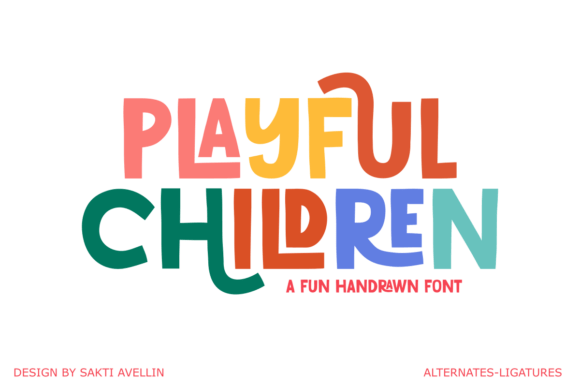
At first glance, you might notice the organic, flowing forms that give this font its distinctive character. Each letter feels hand-drawn, with subtle variations in weight and playful imperfections that avoid looking sterile or overly geometric. This is a premium font that understands the balance between whimsy and professionalism. It’s a display font, meaning its personality shines brightest in headlines and logos, but its carefully considered letterforms ensure it remains legible in the right context. Unlike a standard serif font or a clean sans serif font, it carries a narrative—a story of creativity and play that can become a cornerstone of a brand's visual identity.
The true artistry lies in its versatility. It can feel like a charming script font for a birthday invitation, then transform into a bold, modern typography statement for a toy store's logo. This adaptability makes it a valuable asset in any designer's toolkit, capable of bridging the gap between a heartfelt, handwritten font aesthetic and the reliability needed for commercial applications.
Where Creativity Meets Strategy: Practical Applications
Understanding where to deploy this creative font is key to unlocking its potential. Its strength lies in projects that target families, children, or anyone seeking a touch of warmth and imagination. Consider its impact across these diverse scenarios:
- Brand Identity & Logo Design: For a kindergarten, a boutique toy shop, or a children's clothing line, this font can form the core of a logo. It immediately communicates the brand's ethos—fun, safe, and engaging. Paired with a simple, clean sans serif font for body text, it creates a balanced and professional brand identity that stands out.
- Packaging & Product Design: Imagine the font on snack wrappers, milk cartons, or birthday gift boxes. It springs the fun quotient, making the product itself part of the playful experience. For coffee mugs or t-shirt headers in a kids' apparel line, it adds a classy, joyful add-on that turns mundane merchandise into desirable items.
- Digital & Print Marketing: Social media graphics, blog headers, and website banners become instantly more engaging. Educational posters, learning module covers, and instructional materials use it to strike a chord with young learners, improving readability and focus through friendly visual cues. It’s equally at home on greeting cards, birthday wishes, and even accessories like key chains.
- Editorial & Environmental Design: In a children's book layout or a playful editorial spread, it can be used for chapter titles and pull quotes, adding visual interest without overwhelming the content. For a physical space, think wall decals in a children's room or signage in a daycare—it transforms the environment into a joyous, stimulating place.
Achieving Professional Results with a Playful Tool
Using a font with such a strong personality requires a thoughtful approach to maintain visual consistency and professional presentation. Here’s how to integrate it effectively into your workflow.
Font Pairing is Everything. The key to using a distinctive display font like this is to pair it with a stable, highly readable companion. A neutral sans serif font or a classic serif font for longer paragraphs of text will provide a clean foundation, allowing the playful headlines to shine without creating visual chaos. Test different pairings to see what resonates with your project's goals—is the aim to be whimsical, energetic, or softly nurturing?
Context Dictates Use. Always consider the medium. A bold, large-scale use works wonders for a poster or a logo. For smaller applications like product descriptions or website navigation, you might opt for a more subdued weight or use it sparingly for accents. Readability is paramount; ensure the text remains clear at the intended size, especially for critical information.
Explore the Full Family. A well-designed font often comes with more than one style. Check if your chosen typeface includes variations—perhaps a bold weight, a lighter version, or even alternate characters. This allows for greater flexibility and hierarchy within your designs, helping you build a more sophisticated and layered visual system for your brand or project.
Mind the License. Before finalizing any commercial project, always review the font's licensing terms. A commercial font license ensures you have the legal right to use it for client work, merchandise, and digital products. It’s a small but crucial step in protecting your work and your client's investment, ensuring your beautiful designs are also ethically sound.
In the end, a typeface is a design asset that does more than display words; it conveys emotion, builds recognition, and tells a story. Choosing one that embodies the uninhibited spirit of childhood is a strategic decision to connect with an audience on a deeper, more joyful level. It’s about embracing creativity as a core part of your visual communication, turning every project into an opportunity to spark a little wonder.