Hazel: The Hand-Pressed Soul of Your Next Brand Identity
There’s a certain magic in objects that bear the mark of a human hand. Think of the slightly uneven edge of a hand-thrown ceramic mug, the rich grain of a butcher block table, or the deep, textured impression of a letterpress invitation. In a world saturated with sleek digital perfection, these imperfections feel authentic, warm, and trustworthy. This is the exact feeling the Hazel typeface is designed to evoke. More than just a collection of letters, Hazel is a digital artifact that channels the soulful, imperfect beauty of traditional block printing, offering a bridge between artisan heritage and contemporary design.
Understanding Hazel's Visual Character
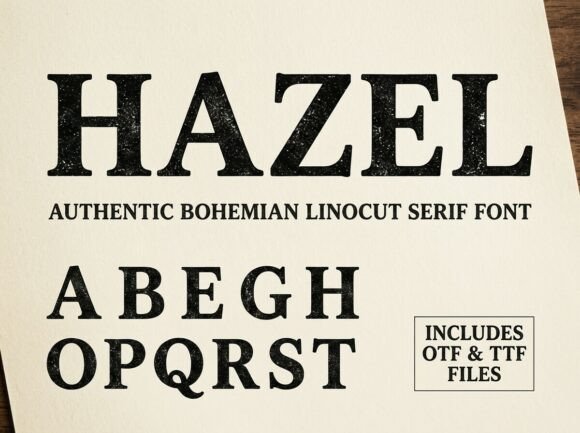
Hazel is a linocut serif font, which immediately tells you something about its personality. Unlike a crisp, vector-drawn typeface, its letterforms are built on sturdy, classic serif foundations but are then given life through a distressed, ink-on-paper texture. This isn't a uniform, machine-made distress. It’s the kind of organic, slightly uneven surface you’d see from a hand-carved linoleum block pressed into paper. The ink pools in some areas and thins in others, creating a tactile quality you can almost feel through the screen.
This "hand-pressed-heritage" soul makes Hazel a premium font with a specific role in your design toolkit. It’s not trying to be everything to everyone. Instead, it excels at conveying warmth, authenticity, craftsmanship, and a connection to the past. Its classic serif structure ensures it remains highly legible and grounded, while its texture adds a layer of storytelling and visual interest that a standard serif font simply can't match.
Where Artisan Craft Meets Modern Application
The true value of a creative font like Hazel is in its application. Its unique character allows it to solve specific branding and design challenges with grace and personality. Here’s where it truly shines:
- Branding & Logo Design: For businesses built on a story of handcrafted quality, Hazel is a natural fit. Imagine it on the logo for an independent apothecary, a boutique winery, or an artisanal bakery. It instantly communicates a commitment to traditional methods and careful curation. It’s the typographic equivalent of a wax seal on a letter.
- Packaging Design: On a label for small-batch jam, a craft beer, or organic skincare products, Hazel does more than display the product name. It tells the consumer, “This was made with care.” Its texture adds depth to flat packaging, making products feel more premium and considered.
- Editorial & Print Layouts: Use Hazel for headlines in a magazine, cookbook, or lookbook to create a strong, thematic anchor. It pairs beautifully with clean sans-serif body text, providing a striking contrast between rustic display type and modern readability. Think mastheads, chapter titles, or pull quotes that need to command attention.
- Digital Presence & Social Media: In the realm of web design and social media graphics, Hazel helps cut through the noise of generic templates. Use it for your website's hero section headline, blog post titles, or Instagram story headers to establish a consistent, recognizable brand aesthetic. It’s perfect for creating a “cottage-core” or rustic vibe that feels genuine.
- Physical Collateral & Merchandise: From wedding invitations and event posters to merchandise like tote bags and t-shirts, Hazel’s texture ensures designs look intentional and tactile, even when printed digitally. It elevates simple designs, making them feel like limited-edition prints.
Practical Guidance for Pairing and Presentation
Working with a textured display font requires a thoughtful approach to maintain professionalism and clarity. The goal is to let Hazel’s personality shine without overwhelming your design or sacrificing readability.
Mastering Font Pairings
The golden rule with a strong character font is balance. Hazel’s distressed serif style demands a complementary partner that is clean, neutral, and highly readable. Your best bets are:
- A Clean Sans-Serif: Fonts like Montserrat, Lato, or Open Sans provide a perfect modern counterpoint. Use the sans-serif for body copy, navigation, and smaller text elements where legibility is paramount. This contrast makes Hazel’s headlines pop even more.
- A Simple Serif: For a more traditional feel, pair Hazel with a very clean, classic serif like Lora or Source Serif Pro. Ensure the companion serif is significantly less decorative to avoid visual competition.
- A Subtle Script or Handwritten Font: For projects that fully embrace an organic, handmade feel, a delicate script can work for accents. Use this sparingly—perhaps for a tagline or a small call-to-action—to avoid a cluttered look.
A key tip: Always test your pairings in context. Create a mock-up of your actual project—a business card, a social media post, a webpage—to see how the fonts interact at real sizes and in real layouts.
Ensuring Readability and Impact
Because of its texture, Hazel is best used at larger sizes. It’s a display font, meaning it’s designed for headlines, titles, and short bursts of impactful text, not for paragraphs of body copy. At small sizes, the distress details can become muddy and hinder legibility. Always prioritize the viewer’s ability to easily read and understand the message.
When setting headlines, give the text room to breathe. Generous letter-spacing (tracking) and line height (leading) can enhance its readability and allow the beautiful texture of each letterform to be appreciated. Consider the background; a solid, muted color or a subtle texture often works better than a busy photograph behind the text.
Leveraging Included Font Styles
A quality typeface like Hazel often comes with more than one style. Check if it includes variations like Hazel Regular, Hazel Bold, or Hazel Inline. Using these variations allows you to create hierarchy within your designs while maintaining absolute visual consistency. A bold weight can add emphasis, while an inline style might offer a different textural effect for specific accents.
Beyond Aesthetics: The Strategic Choice
Choosing a font like Hazel is a strategic decision about your brand’s voice. It’s an investment in a design asset that helps build a cohesive visual identity. When your logo, website, packaging, and social media all use the same distinctive typeface, you reinforce brand recognition. Customers begin to associate that unique, textured serif with your specific values of quality and authenticity.
From a commercial font perspective, ensure you have the correct license for your intended use, whether it’s for a client project, merchandise, or digital products. A proper license is part of respecting the craft of the type designer and ensuring you can use the asset legally and confidently across all your projects.
In the end, Hazel is more than a font. It’s a tool for connection. It allows you to wrap your modern project in the comforting, trustworthy aesthetic of the handmade, creating designs that don’t just catch the eye, but speak directly to the soul of anyone who values things made with intention.