Bringing Your Brand to Life with the Foodie Story Typeface
There is a specific kind of magic that happens when a design feels truly human. In a digital landscape often dominated by geometric precision and sterile sans-serifs, the warmth of a hand-drawn element can stop a scrolling thumb in its tracks. If you are building a brand that needs to feel accessible, cozy, and undeniably fun, you know that standard corporate fonts often fall flat. You need a voice that sounds like a conversation between friends, a visual tone that smells like fresh baking or a weekend BBQ. That is exactly the space where the right typography becomes your most powerful storytelling tool, transforming a simple logo into a recognizable personality.
The Power of Imperfection in Modern Typography
We are seeing a massive shift in visual communication right now. Consumers are tired of the overly polished, artificial aesthetic. They crave authenticity. This is why organic letterforms are dominating the creative space, particularly in the food and beverage industry, as well as lifestyle branding. A display font with a handmade quality signals to your audience that there is a real person behind the product. It suggests craftsmanship and care.
However, there is a fine line between "charmingly imperfect" and "sloppy." This is where the craftsmanship of a premium font comes into play. While it might look like a quick doodle, a professional typeface is meticulously kerned and spaced to ensure that the "messiness" is actually readable. It provides the structure needed for professional presentation while maintaining that raw, artistic energy. It bridges the gap between a rough sketch in a notebook and a polished commercial asset.
Why "Foodie Story" Works for Visual Communication
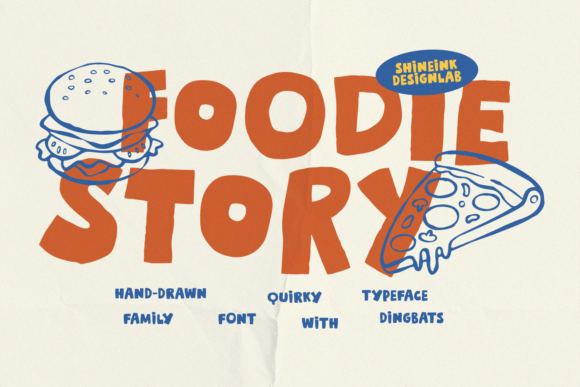
When we look at the Foodie Story typeface, we see a masterclass in balancing character with utility. It is not just a font; it is a visual identity system. The chunky, bold nature of the letterforms ensures that it commands attention, making it an excellent choice for headers, logos, and packaging where immediate recognition is key. The design draws inspiration from fun food illustrations, giving it a playful vibe that feels energetic without being chaotic.
What makes this particular creative font stand out is its versatility within its niche. It is designed to bring warmth into your projects, but it does so with a confidence that prevents it from looking childish—unless you want it to, of course. The "doodle-style" personality is consistent across the alphabet, meaning you don’t get those jarring moments where one letter looks like it belongs to a different family than the next. For a designer, this consistency is gold. It allows you to build complex layouts—like a restaurant menu or a product label—without worrying about the typography falling apart visually.
Practical Applications: From Packaging to Social Media
So, how do you actually use a font like this in the wild? The applications are vast, but they work best where personality is the priority over formal authority. If you are working on a project that needs to engage an audience emotionally, this is the tool to reach for.
Consider the world of packaging design. Imagine a line of artisanal hot sauces or a boutique cookie mix. The product needs to scream "delicious" from the shelf. Using a stiff, corporate serif font would undercut the homemade vibe. Foodie Story, with its hand-crafted feel, acts as a promise of quality and flavor before the customer even tastes the product. It pairs beautifully with kraft paper textures and bold, flat color palettes.
For social media graphics, the stakes are high. You have milliseconds to capture interest. A bold, expressive typeface is perfect for Instagram stories, Reels covers, or Pinterest pins. Because the font has a "storytelling vibe," it works exceptionally well for quotes, daily specials, or call-to-action overlays. It adds a layer of entertainment to the information, making the content feel more like a magazine editorial and less like a corporate advertisement.
Don't overlook web design and blogs, either. While you wouldn't want to write an entire 2,000-word article in a display font (readability would suffer), using it for H1 headers, pull quotes, or navigation buttons can completely change the user experience. It creates a cohesive atmosphere. If you run a food blog, using Foodie Story for your headers ties your digital presence directly to the subject matter, reinforcing your brand identity every time a reader visits your site.
Unlocking Creativity with Dingbats and Illustrations
One of the most practical features of the Foodie Story package is the inclusion of a dedicated dingbats collection. In the past, designers had to hunt for separate vector illustrations to match their typography, often spending hours adjusting stroke weights and styles to make them look like they belonged together.
With this font, the hard work is done. The collection includes fun food illustrations that are stylistically identical to the letterforms. This is a massive time-saver for creating marketing assets. Need a quick divider for a menu? Use a taco icon. Need a background pattern for a pizza box? Mix and match the letters with the icons to create a seamless, playful composition. This integration ensures visual consistency—a key component of professional design—across all your deliverables, whether it’s a poster for a local burger joint or a sticker set for a kids' project.
Strategic Pairings and Professional Polish
While Foodie Story is a star player, no font works in a vacuum. A crucial part of design strategy is font pairing. Because Foodie Story is bold, organic, and highly expressive, it pairs best with something that steps back and lets it shine. You generally want to avoid pairing it with another script or handwritten font, as this creates visual noise and confusion.
Instead, look for a clean, modern sans-serif or a simple serif font for your body text. The contrast between the playful, irregular shapes of the headers and the clean geometry of the paragraph text actually improves readability. It guides the reader's eye, signaling "this is the fun part" versus "this is the detailed information." For example, pairing it with a light-weight sans-serif for a wedding invitation design can balance the whimsy with elegance, making it suitable for a more upscale event while keeping the tone friendly.
Licensing and Commercial Use
For entrepreneurs and small business owners, the legal side of design assets is just as important as the aesthetic side. When investing in a typeface, you are investing in a commercial font. This means you have the rights to use it on your merchandise, products, and digital platforms.
This is particularly important if you plan on selling physical goods. Whether you are printing the font on t-shirts, mugs, or packaging, a proper license ensures you are protected. It allows you to scale your business without worrying about copyright infringement down the line. It’s an investment in your brand's future, ensuring that your visual language remains exclusively yours (or at least legally yours to use) as you grow.
Final Thoughts on Brand Personality
Typography is often described as the voice of the design. If your brand were a person, what would they sound like? If the answer is "friendly, creative, warm, and a little bit cheeky," then a hand-drawn display font is the right choice. It moves away from the coldness of mass production and embraces the joy of creation.
Foodie Story offers a distinct advantage for those in the culinary, lifestyle, or children's markets. It provides a toolkit that is ready to go, reducing the friction between your idea and the final execution. By utilizing its unique character and complementary illustrations, you can create a cohesive visual world that doesn't just sell a product—it tells a story.